
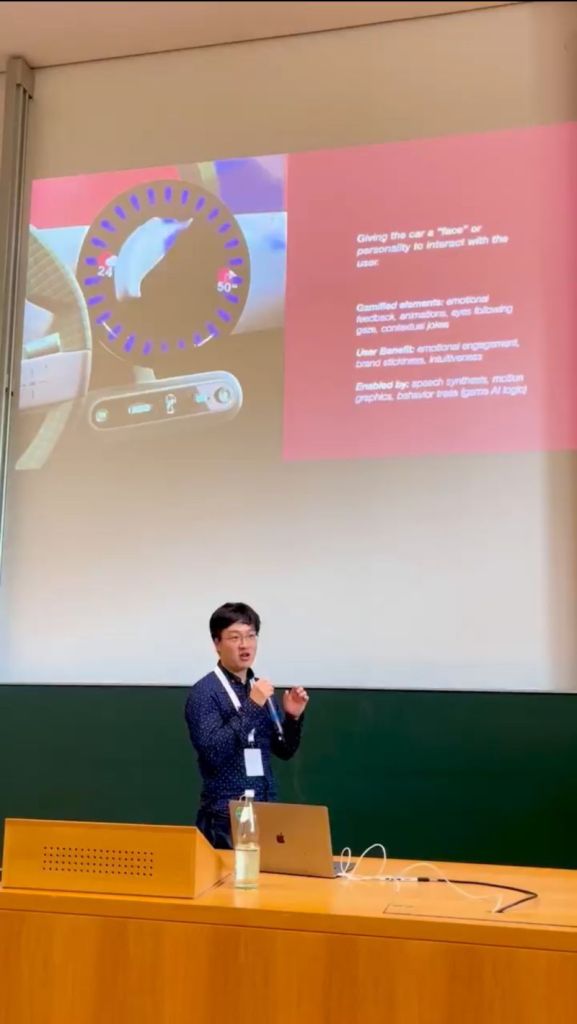
One key differences of in-car UX/UI between China and Europe/US lies in the role of gamification(not In-Car-Gaming)/emotional design in HMI.🚗🕹️In EU/US, cars are still widely viewed as functional tools — designed to get us from A to B. Whereas in China, especially among younger generations, cars are increasingly expected to deliver emotional value, entertainment, and even a sense of companionship.
They’re not just about mobility — they’ve become a part of lifestyle and identity.
Yesterday at UX Camp, I had the chance to share some of my research in a session titled: “𝐃𝐑𝐈𝐕𝐈𝐍𝐆 𝐈𝐒 𝐁𝐎𝐑𝐈𝐍𝐆 — 𝐮𝐧𝐥𝐞𝐬𝐬 𝐲𝐨𝐮’𝐫𝐞 𝐢𝐧 𝐚 𝐂𝐡𝐢𝐧𝐞𝐬𝐞 𝐄𝐕” to bring a different angle to the audiences.
My talk aimed to spark three key reflections:
1️⃣ Why emotional attachment should be a core goal in automotive UX
2️⃣ How gamification and game thinking can transform the in-car experience
3️⃣ Why it’s essential to recognize that users across regions and demographics have drastically different needs and expectations when it comes to design, interaction, and aesthetics
As cars evolve into multi-dimensional digital spaces — with:
📱 increasingly smart & connected cockpit systems
🧠 richer interactions between user and machine
🏠 a growing role as temporary living spaces
We, as designers, should challenge old assumptions and rethink what meaningful automotive experiences truly look like. It’s time to design not only for usability, but also for delight , identity , and cultural relevance. What might be possible if we designed less for transportation — and more for transformation?
Special thanks to all the organising team of the hashtag#uxce25 event, Katharina Staszkow help me get to the event and Katja Paar for offering me the amazing book “hashtag#WorkshopsMachen“.
hashtag#UXCamp hashtag#AutomotiveUX hashtag#Gamification hashtag#EmotionalDesign hashtag#CrossCulturalUX hashtag#ChineseEVs hashtag#MobilityDesign hashtag#UXResearch hashtag#DesignThinking
 Parallel Drive
Leave a comment