
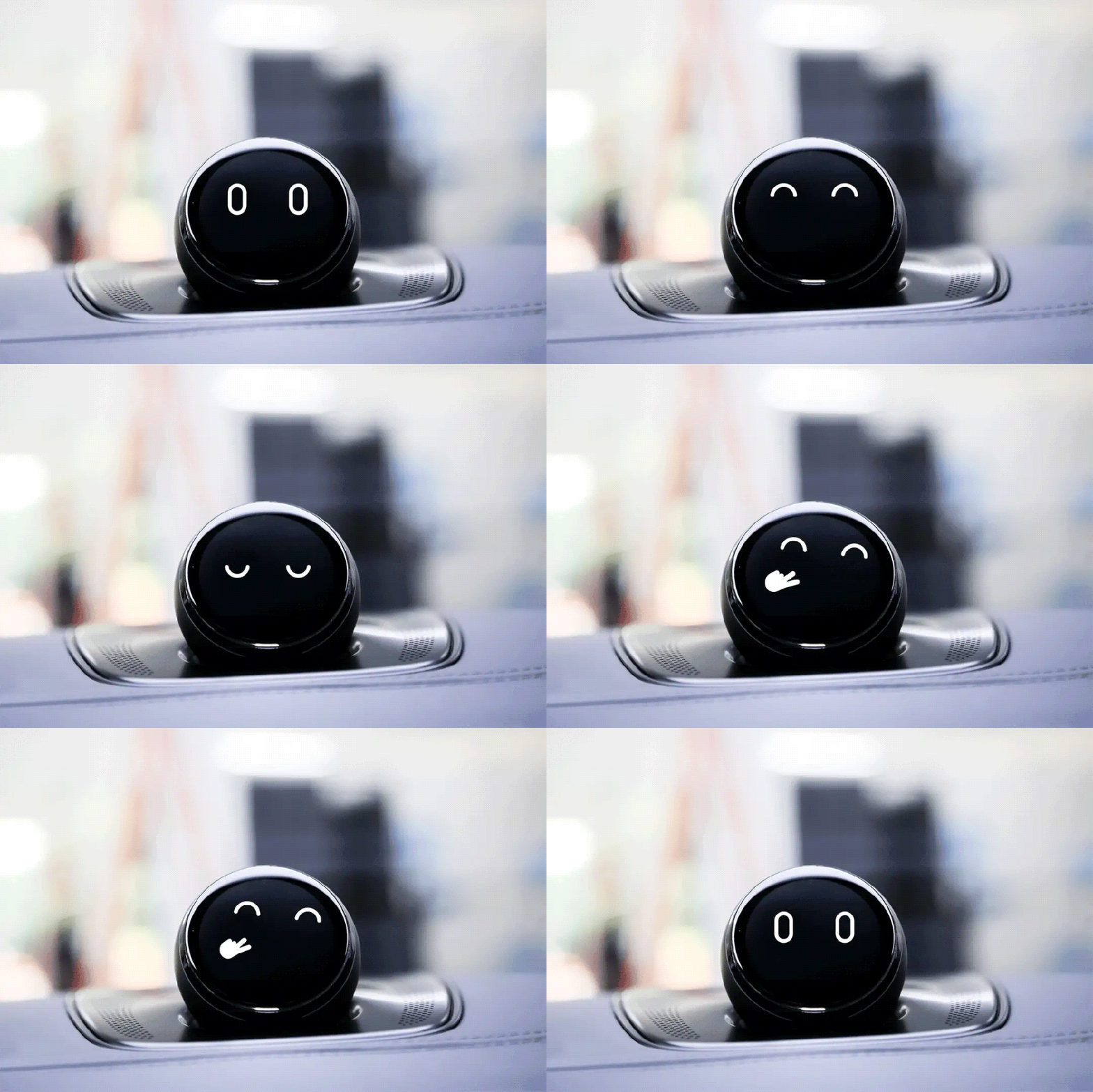
In the world of rigorous German engineering, the answer is almost always a resounding yes. Efficiency, safety, and ergonomics are the pillars of the “Perfect Machine.” But in the rapidly evolving Chinese automotive landscape, a new metric is defining success: 情绪价值 (Qíngxù Jiàzhí)—or “Emotional Value.”
Refining our understanding of Emotional Value, it’s important to note that this isn’t about traditional practicality or usability. It is about emotional design, for empathy and fulfilment. It is the design of features that exist solely to make the user feel good, providing a sense of companionship or a brief mental escape. To a functionalist, these might seem “meaningless,” but to a consumer, they are the heartbeat of the vehicle. Some of the in-car Emotional Value deliveries included:
1️⃣ NOMI by NIO: The gold standard. It isn’t just a voice assistant; it’s a physical entity on the dashboard that “looks” at you, blinks, and reacts. It transforms a cold AI into a digital friend that provides constant emotional feedback. 🤖
2️⃣ Gen-AI Enabled Avatars: Instead of a menu, many brands now offer visualised avatars with distinct personalities. These aren’t just for “setting the temperature”; they engage in Gen-AI driven conversations that offer genuine digital companionship.
3️⃣ Multi-Sensory “Mood” Scenes: One-touch transformations that turn the cabin into a “Forest Oxygen Bar” or a “Meditation Space,” orchestrating fragrance, haptic seating, and 256-color ambient lighting to curate a specific emotional state. 🌿✨
For a design to truly resonate in the modern Chinese market, it must transcend being “useful” and embrace being “meaningful.” Because sometimes, the user prefers more for the human touch than a technical specification. And my following question is, have you paid for the Emotional Value?
 Parallel Drive
Leave a comment